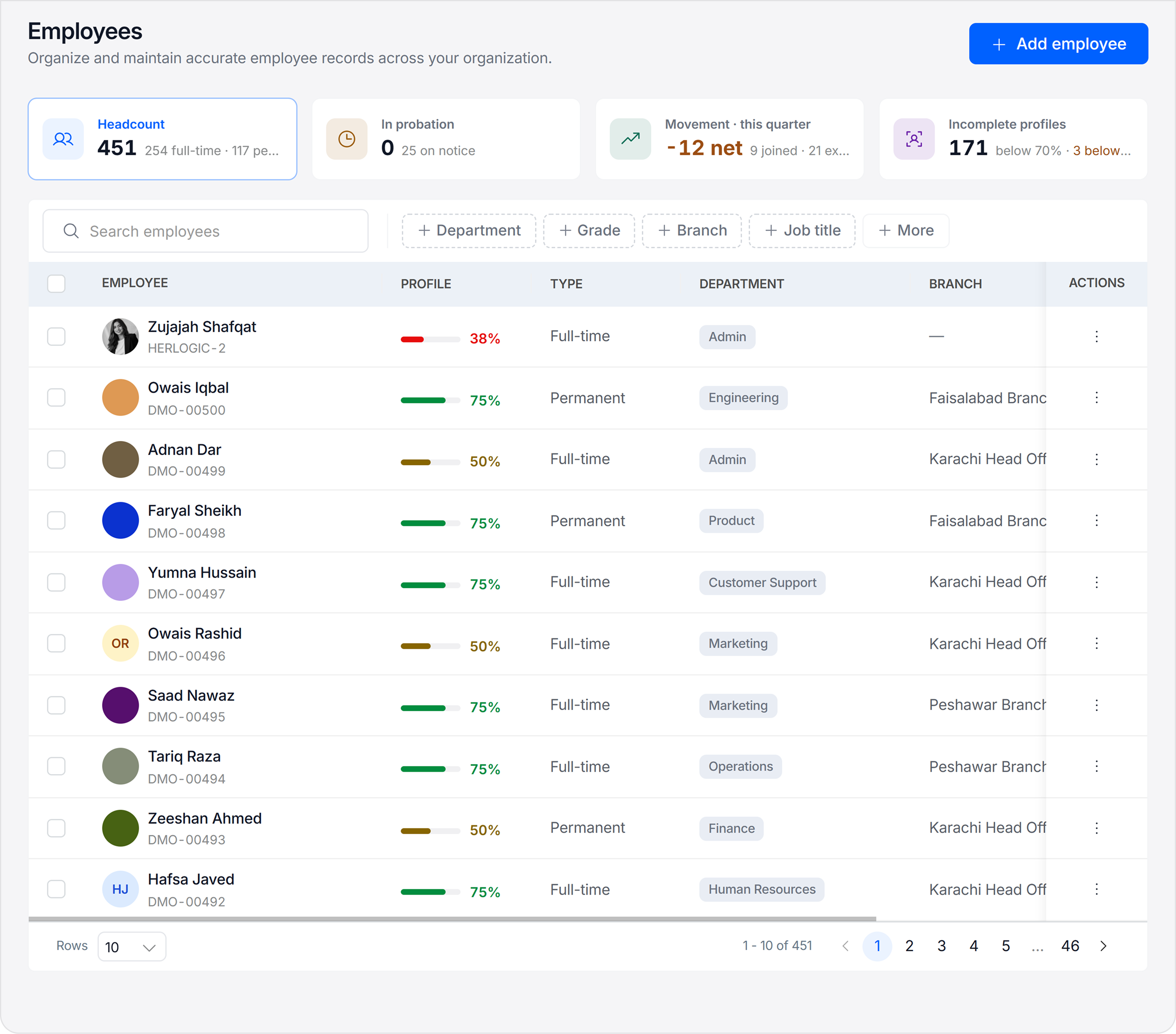
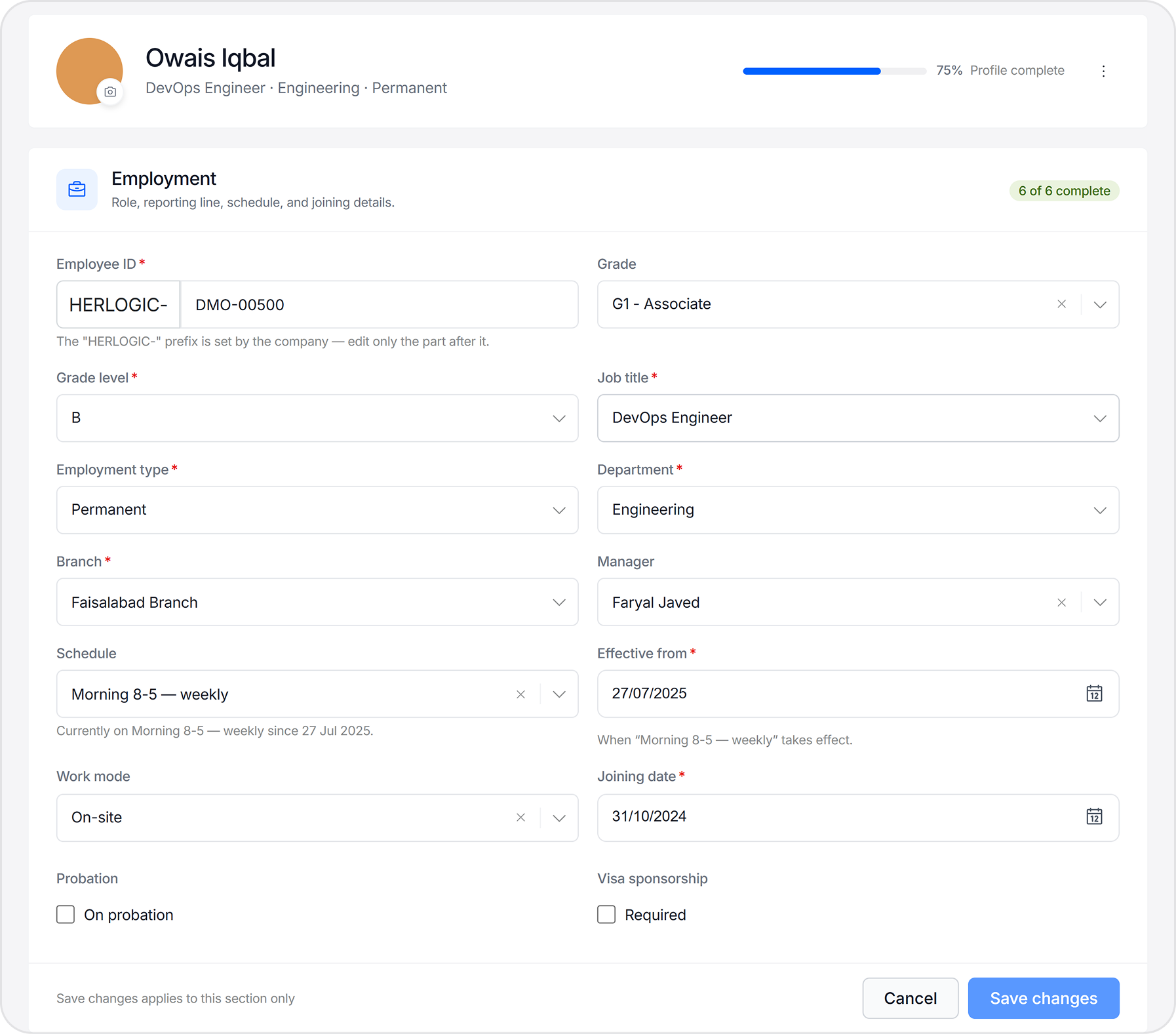
ChordHR manages the complete employee lifecycle in a single profile — from the onboarding checklist before Day 1, to the offboarding checklist on the last day, and every change in between.

Most HR teams manage onboarding in one place, employee records in another, and assets somewhere else entirely. ChordHR puts every stage of employment on a single profile — so nothing needs to be re-entered, reconciled, or chased down.
Each module covers a distinct stage of the employee lifecycle — and all four read from and write to the same employee profile, so nothing ever needs to be re-entered or reconciled.
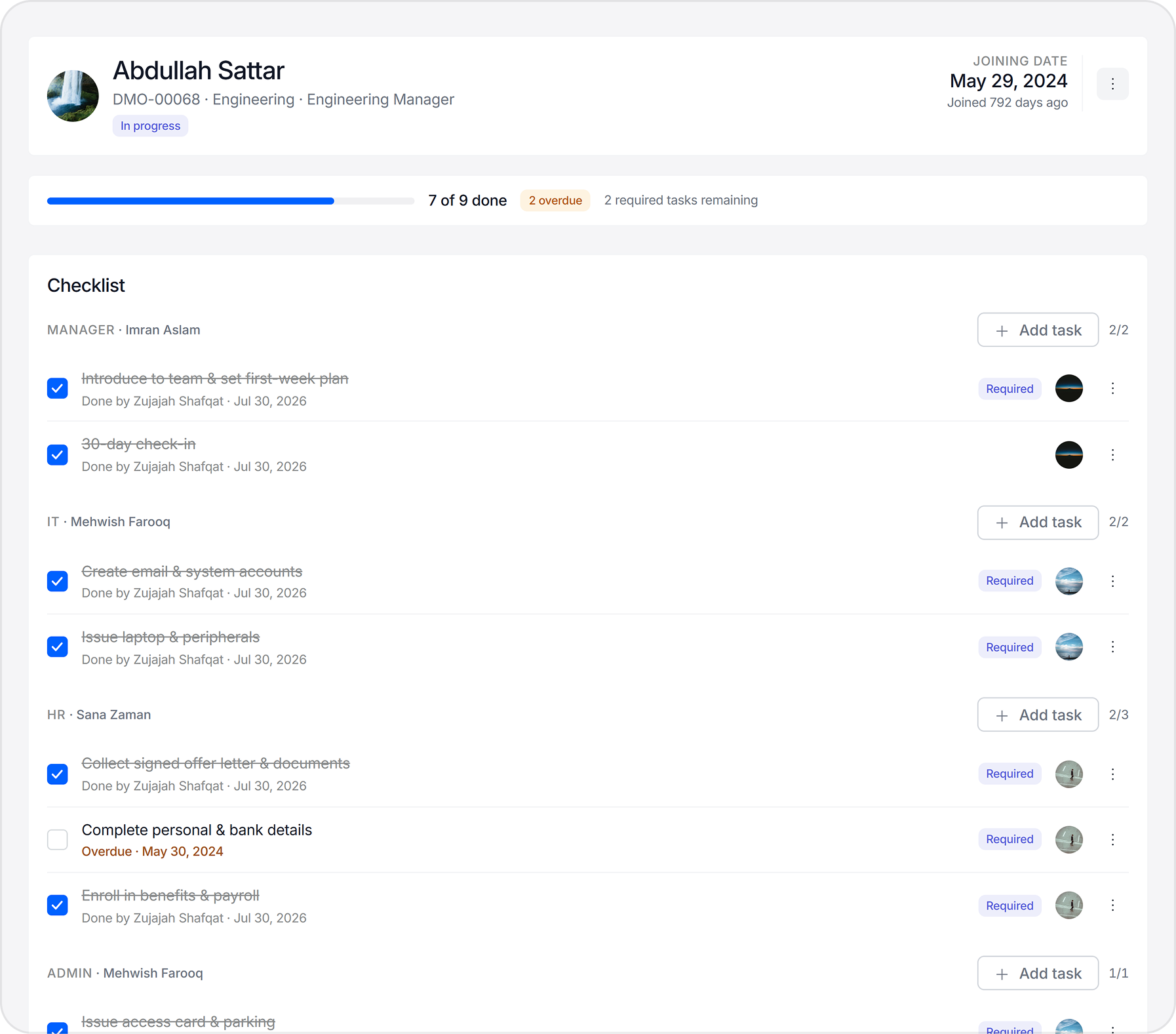
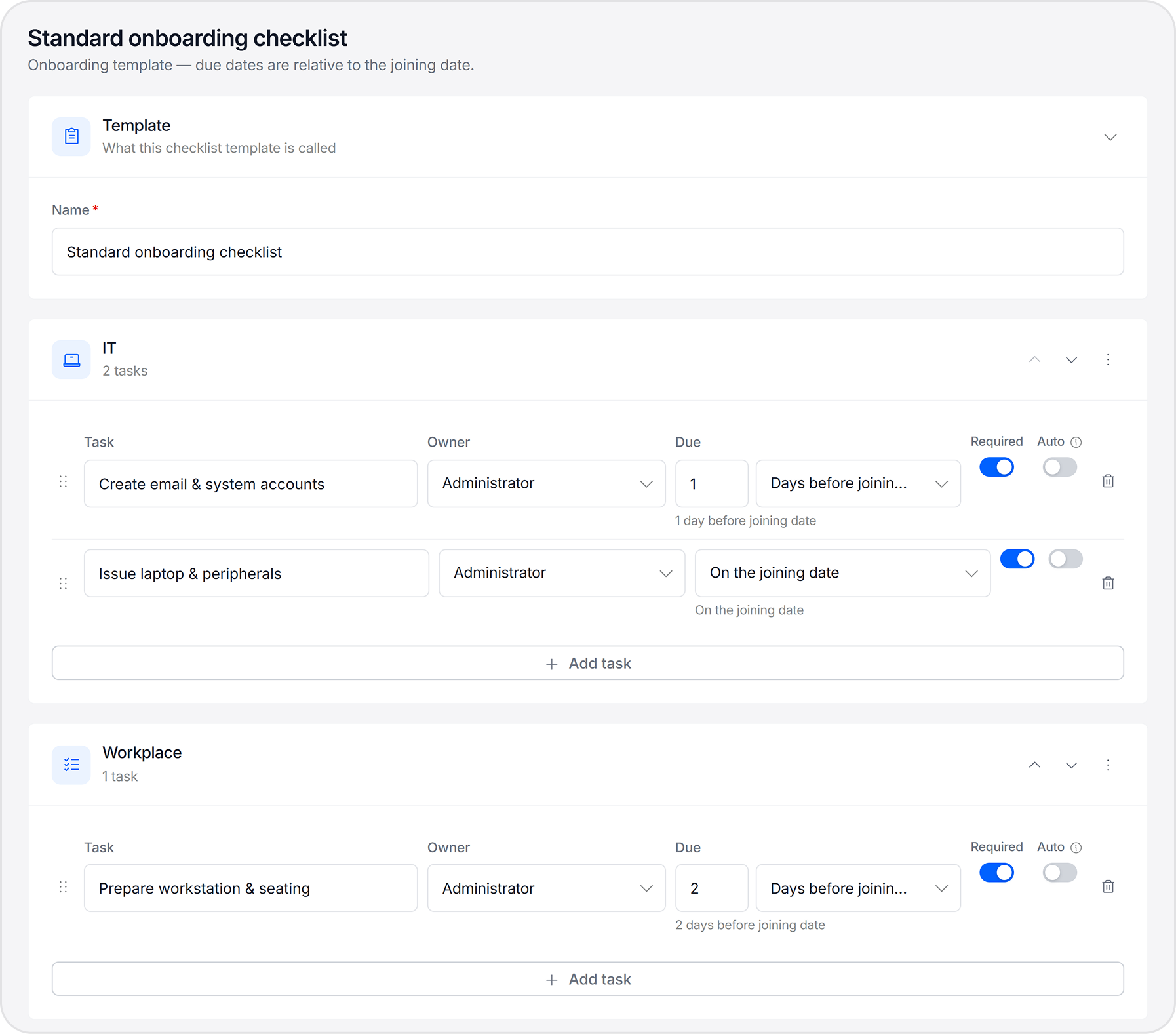
The moment a start date is set, ChordHR builds the onboarding plan automatically. Every task is assigned to the right person — IT, HR, the manager, or the new hire — and nothing moves forward until it's done.
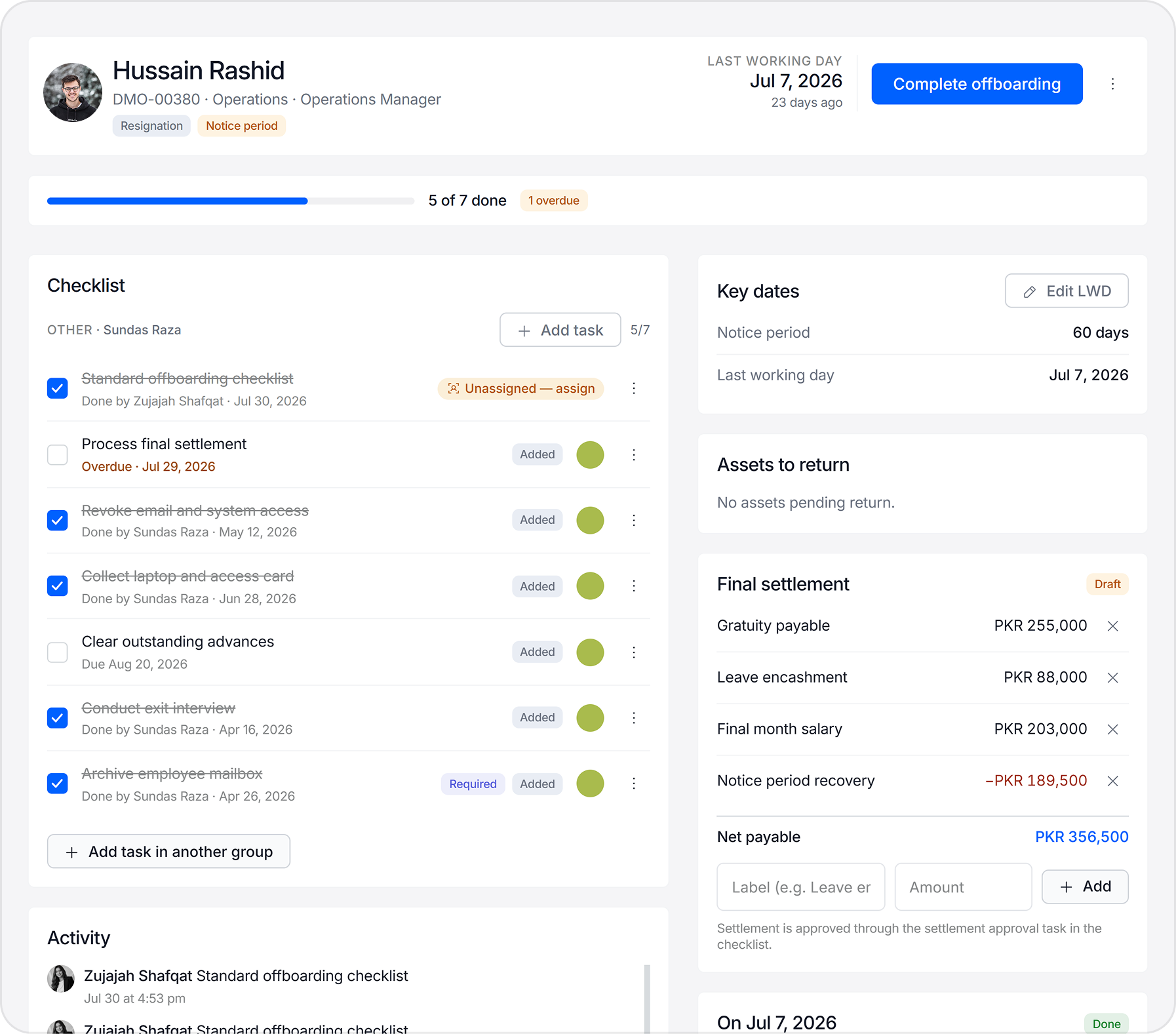
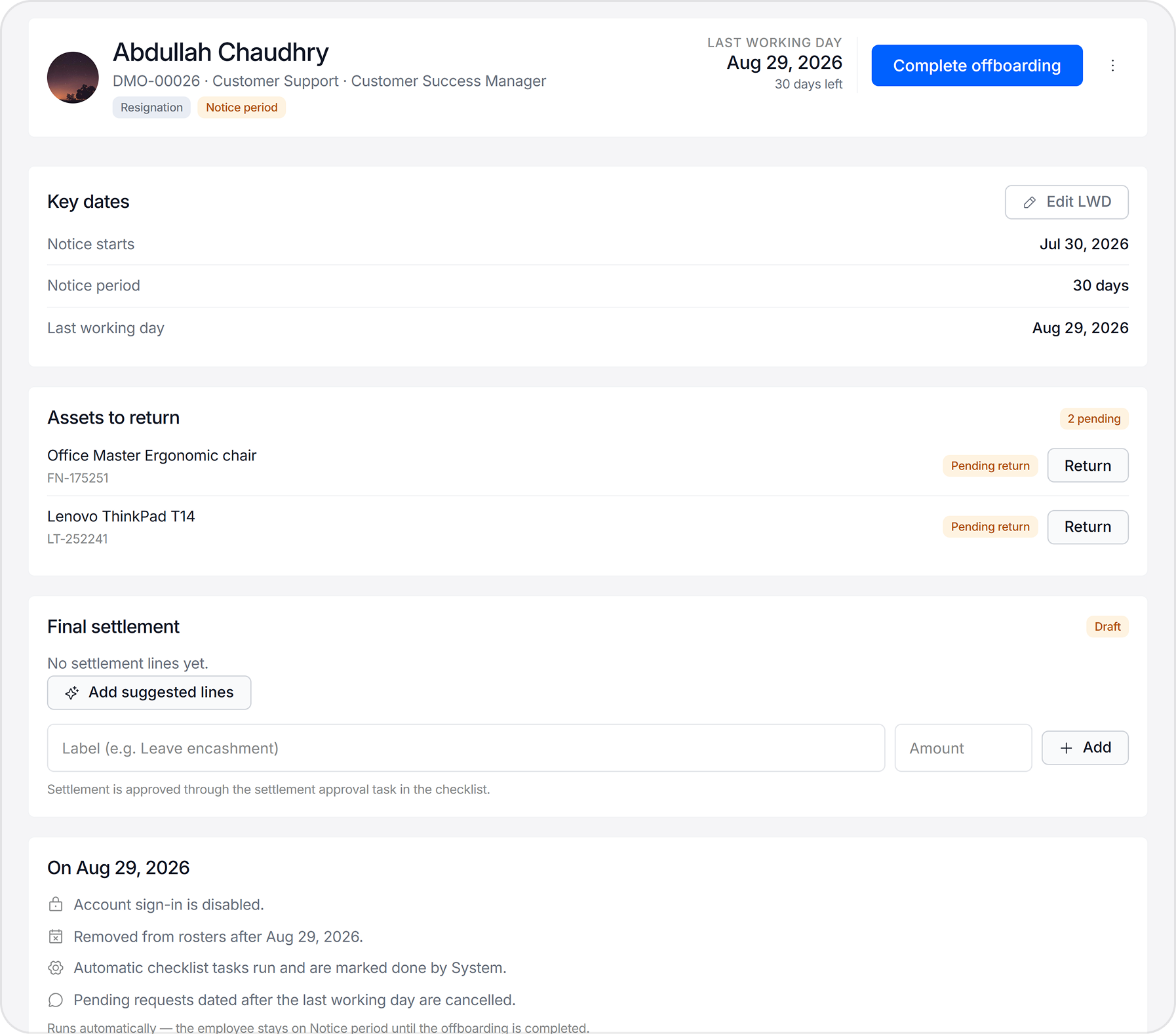
Departures create more loose ends than most teams realise — access that wasn't revoked, assets that weren't returned, settlements that weren't processed. ChordHR closes each one systematically before the last day passes.
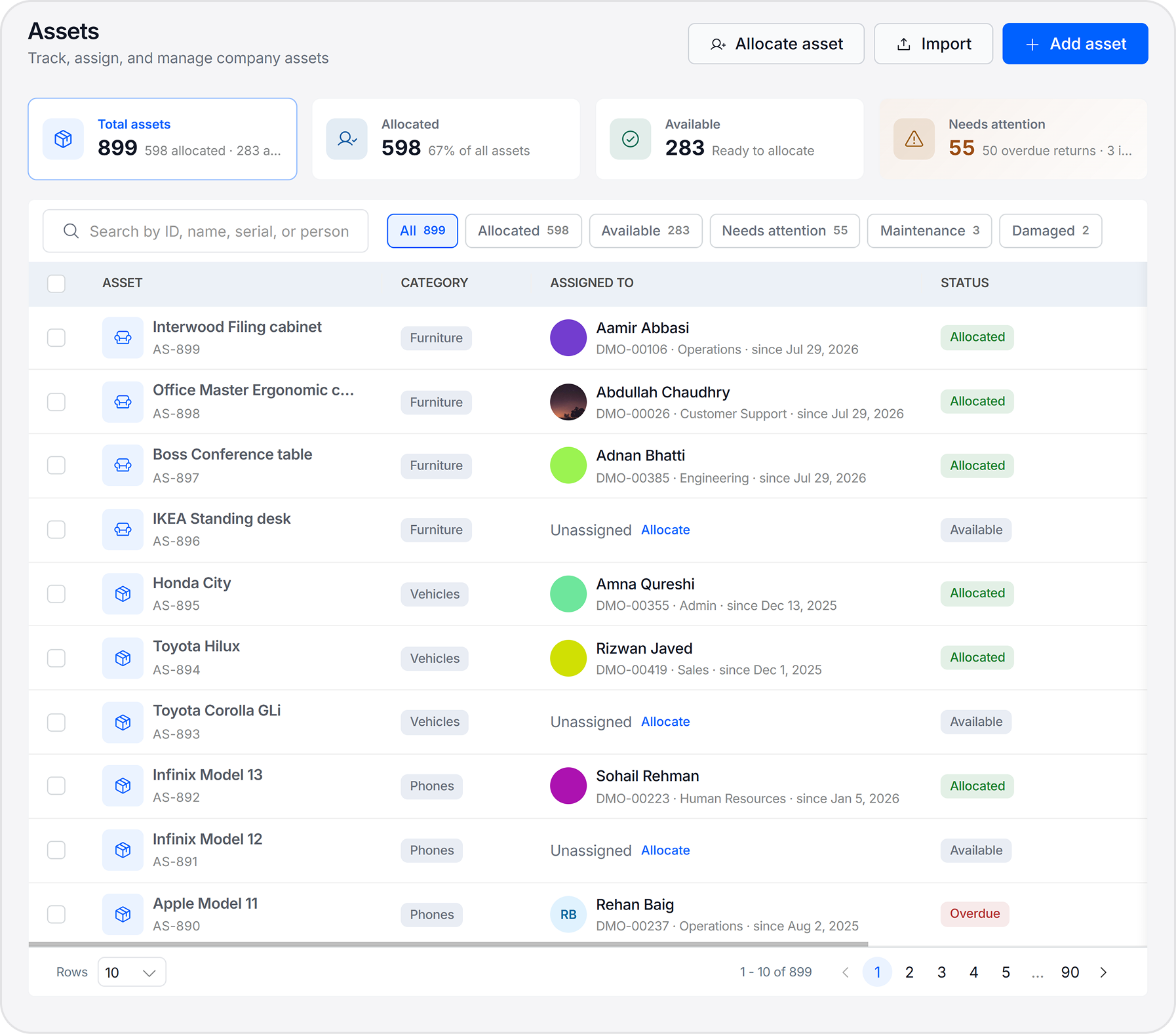
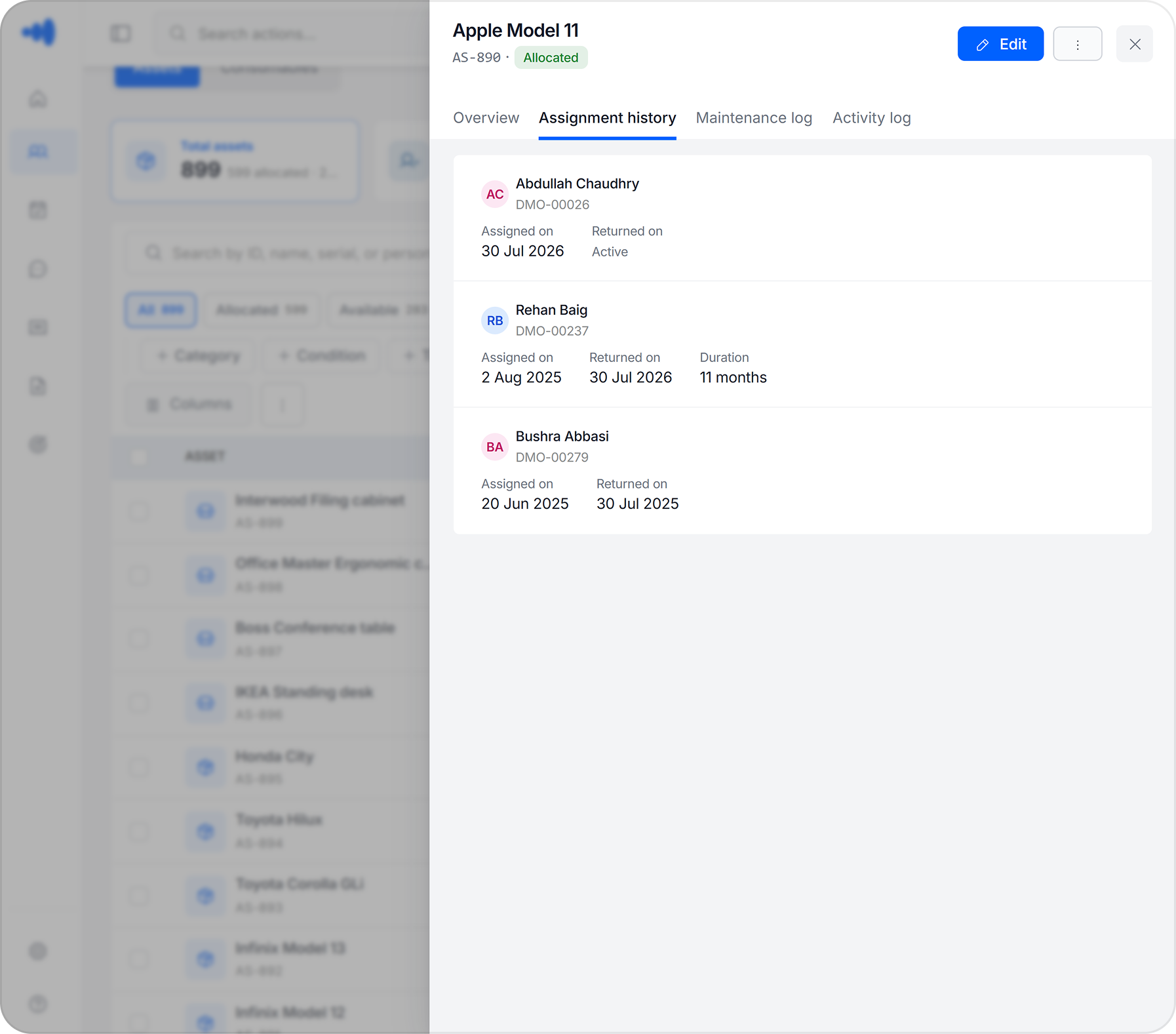
When assets are assigned to employees, the record is live — who has what, when it was issued, and its current status. When someone leaves, open assets surface automatically as part of offboarding so nothing slips through.
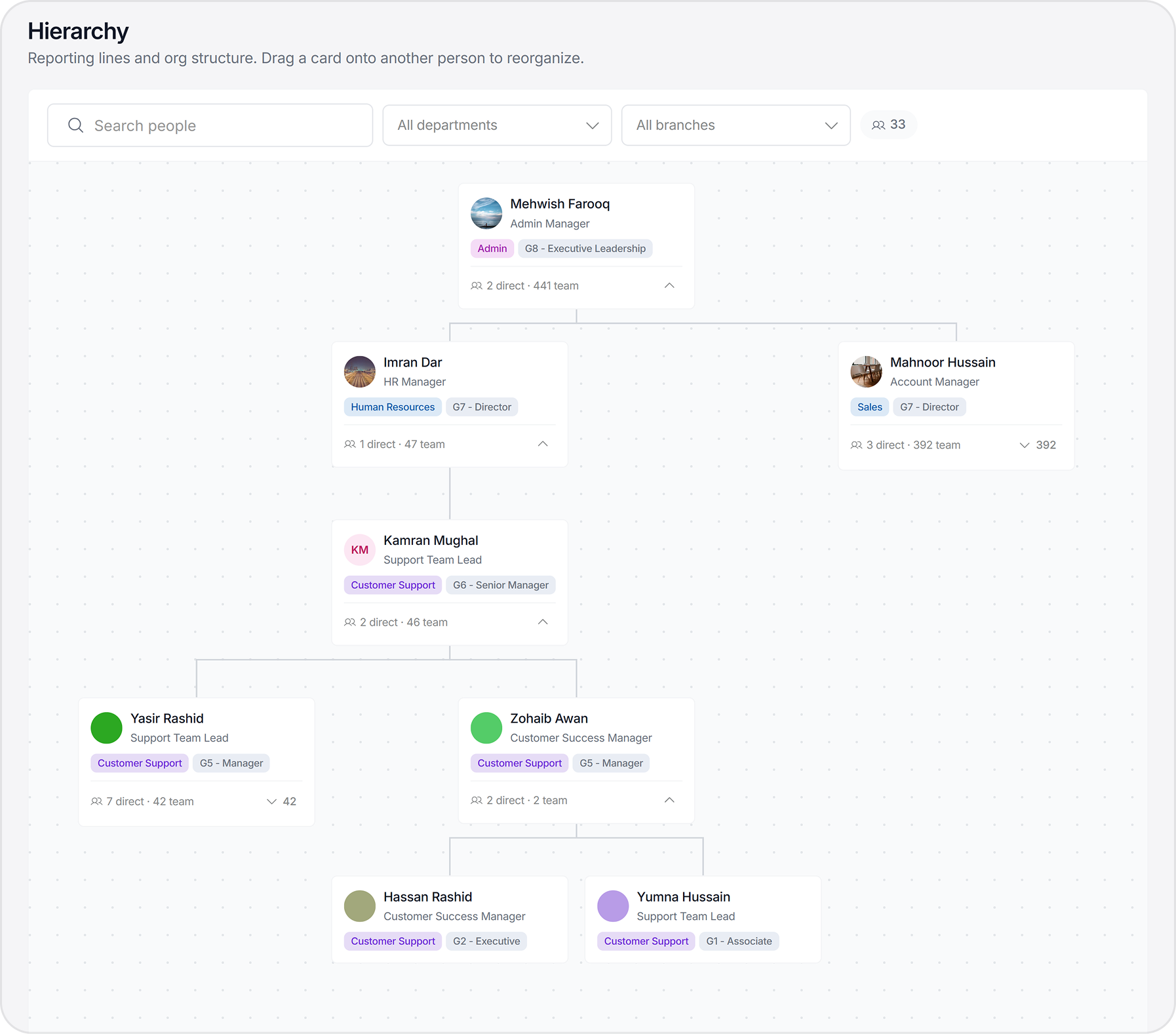
Every employee profile shows their position in the org — reporting line, department, and manager. When things change, the hierarchy updates automatically and the full history of who reported to whom is retained.
These aren't edge cases. They're the things HR managers bring up in the first five minutes of every demo call.
HR confirms the hire and sends a welcome email. IT finds out on Day 1 when the new hire walks in. Laptop is unprovisioned, access isn't set up, and the first day is wasted waiting.
Someone leaves and HR sends the exit email. But benefits stay active for weeks, the laptop never comes back, and the final settlement sits in a manager's inbox. Every loose end has to be chased manually — and some never get closed.
A laptop gets repaired, handed to a new employee, and returned damaged. There's no record of who had it, when it was serviced, or what condition it was in at each handover. Every audit becomes a guessing game.
The org chart lives in a PowerPoint updated once a year. When teams restructure or managers change, nobody updates it. New hires can't figure out who reports to whom, and approvals get stuck because the chain isn't clear.
The HR system has the joining details. Everything since — role changes, department moves, updated emergency contacts, new bank details — lives in emails and spreadsheets, or nowhere at all. The employee record is a snapshot of Day 1, not the present.
Basic tools leave gaps between recruiting and onboarding. Enterprise platforms close them with complexity. ChordHR gives you the continuity that matters, without the overhead.
Employee Lifecycle shares the same data layer as the other four module groups. Onboarded employees feed directly into attendance and leave management. The employee profile built during recruitment is the same one that powers payroll, performance, and compliance — throughout their time here.